Speech, Language, PROMPT,
Orofacial Myology, DTTC, Feeding Services
Evaluation and Treatment of Pediatric Patients
“Thanks for all the amazing work you’ve done with T. When I think back at how much progress he’s made since he started seeing you it fills me with tears and gratitude ;) I don’t know where we would be if we hadn’t been referred to you!!” Mom of 6 year old boy

PROMPT
Prompts for Restructuring Oral Muscular Phonetic Targets is a holistic and dynamic approach that incorporates the use of organized and systematic tactile (touch) input to the oral musculature to facilitate and/or improve speech production. It is a highly effective method for children with motor speech disorders.
Learn more about PROMPT by visiting promptinstitute.com
Apraxia of Speech
In order for speech to occur, messages need to go from your brain to your mouth. These messages tell the muscles how and when to move to make sounds. When a child has apraxia of speech, the messages do not get through correctly. The child might not be able to move their lips or tongue in the right ways, even though their muscles are not weak. Sometimes, the child might not be able to say much at all.
Some Signs and Symptoms
Late Talkers
Risk factors may include the following
A “Late Talker” is a toddler (between 18-30 months) who has good understanding of language, typically developing play skills, motor skills, thinking skills, and social skills, but has a limited spoken vocabulary for his or her age. The difficulty late talking children have is specifically with spoken or expressive language. This group of children can be very puzzling because they have all of the building blocks for spoken language, yet they don’t talk or talk very little.
The following guidelines can help you determine if your child’s vocabulary is appropriate for his or her age. If your child has not yet reached these milestones, he or she should be seen by a speech-language pathologist:
18 month olds should use least 20 words, including different types of words, such as nouns (“baby”, “cookie”), verbs (“eat”, “go”), prepositions (“up”, “down”), adjectives (“hot”, “sleepy”), and social words (“hi”, “bye”).
24 month olds should use at least 100 words and combine 2 words together. These word combinations should be generated by the child, and not be combinations that are “memorized chunks” of language, such as “thank you”, “bye bye”, “all gone”, or “What’s that?”. Examples of true word combinations would be “doggie gone”, “eat cookie”, or “dirty hands”.
Orofacial Myology

What is an OMD?
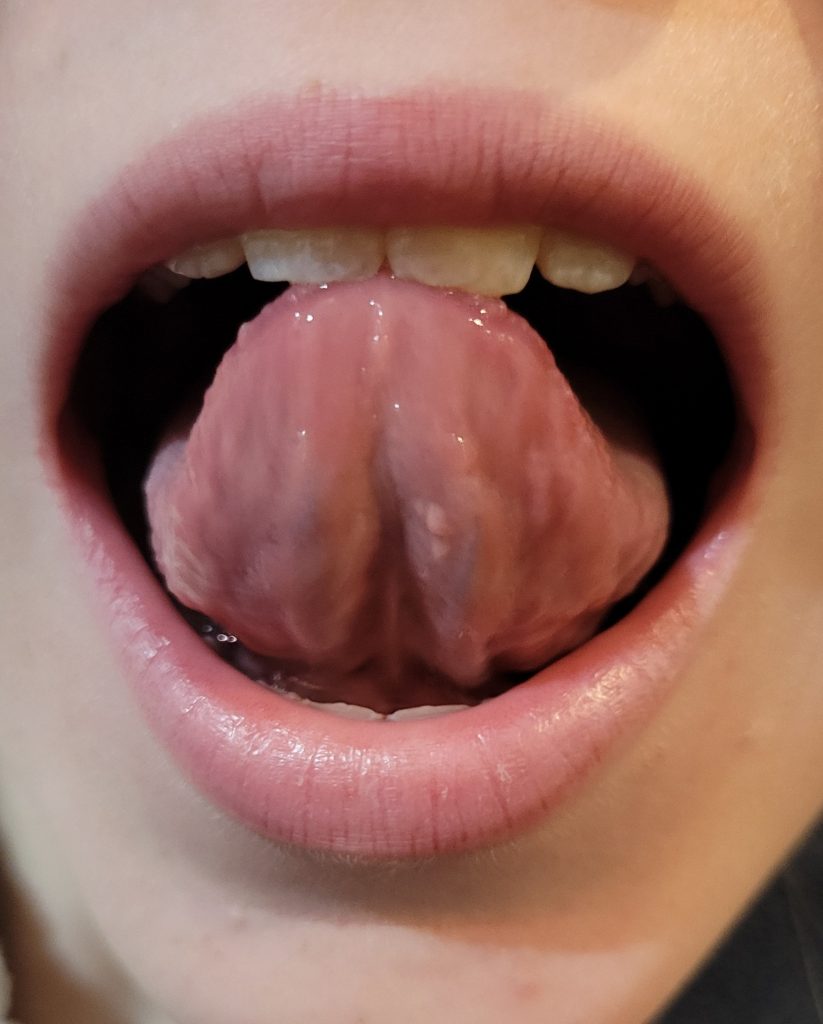
Orofacial myofunctional disorder refers to improper function of the facial muscles, tongue and mouth. OMDs may directly or indirectly affect facial growth and development, chewing, swallowing, speech articulation, occlusion, oral hygiene, stability of orthodontic treatment, facial esthetics and more. Several factors can contribute to OMDs, one being inherited muscle patterns. Another is airway obstruction.
Symptoms of OMDs
Symptoms of orofacial myofunctional disorders can be very obvious or happen over a period of time and be unclear. Certain habits or conditions can interfere with proper actions of orofacial muscles causing OMD. These muscles include cheeks, jaw, lips and tongue. When these muscles function incorrectly due to habits or conditions, it can lead to improper development. This atypical development causes the muscles to have incorrect adaptations and not work in balance which can cause a variety of problems.
Do you suffer from any of the following?
Orofacial Myofunctional Program
Goals of the Program
Our Program is appropriate for children, teens and adults. Program goals are individualized and are meant to create new healthy oral habits. The benefit of healthy habits can include nasal breathing, a proper swallow pattern, favorable resting tongue position and preserving orthodontic results from this program.
This program is comprehensive and covers a variety of oral problems. This program helps reverse damaging habits, such as tongue thrust. This program can last from six months to a year. The objective of this program is to eliminate bad habits, demonstrate therapeutic facial exercises, develop proper lip seal and tongue placement and teach chewing and swallowing patterns to reinforce good habits. These goals will help the structures in the mouth stay in balance and habitualizing the learned behaviors is most important for long term success.
Let’s Change Things
We are dedicated individuals who value the profession we have chosen. We understand that you are entrusting us with your child’s cognitive linguistic, social emotional and physical sensory development. We are determined to provide the best intervention we are capable of each day to every child and family. We will go above and beyond to be a supportive partner in your child’s progress.